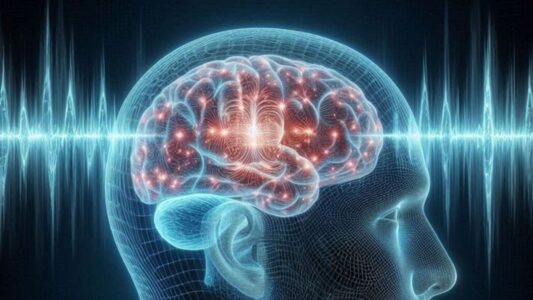

According to research by neuroscientist Dr. Timothy Wilson, our sensory systems receive up to 11 million bits of information per second. This data flows in from our surroundings — largely through visual stimuli, but also through touch, sound, smell, and taste.
But the surprising part is :
➡️ Of those 11 million bits, our conscious mind processes only about 50 to 120 bits per second.
This means that over 99.999% of what we experience is processed unconsciously.
Why is this important?
The human brain has evolved as a high-efficiency processor. Most of what we absorb never enters our conscious awareness — yet it profoundly shapes our decisions, emotions, and behaviors.
Our subconscious mind acts as a powerful filter, constantly scanning for relevance, safety, and pattern recognition. This is why many neuroscientists, psychologists, and healing practitioners focus on subconscious reprogramming — because that’s where the majority of mental processing occurs.
So, where does all this information go?
The brain doesn’t store data like a hard drive. Instead, it encodes experiences through neural networks, synaptic plasticity, and emotional tagging. While estimates suggest the human brain could store the equivalent of 2.5 petabytes of information, this “storage” is dynamic, nonlinear, and largely associative.
In essence, we store not just facts — but feelings, patterns, and meanings.
*It’s use in Healing and Growth*-
This understanding is the backbone of many holistic and scientific approaches, including:
Neuroplasticity practices
EFT (Emotional Freedom Technique)
Meditation and subconscious affirmations
Mindfulness and somatic healing
These tools work not because we consciously analyze every thought, but because they influence the deeper operating system — the 95% we rarely notice.
In a world overflowing with information, it’s empowering to know that the real change often begins beyond our conscious radar.
Harnessing the subconscious mind isn’t mystical — it’s neurological.
Would love to hear your thoughts:
🔹 Have you tried techniques like affirmations, EFT, or neuroplasticity-based practices?
How Much Information Does the Brain Really Process per Second?The Science Behind 11 Million bits per sec.